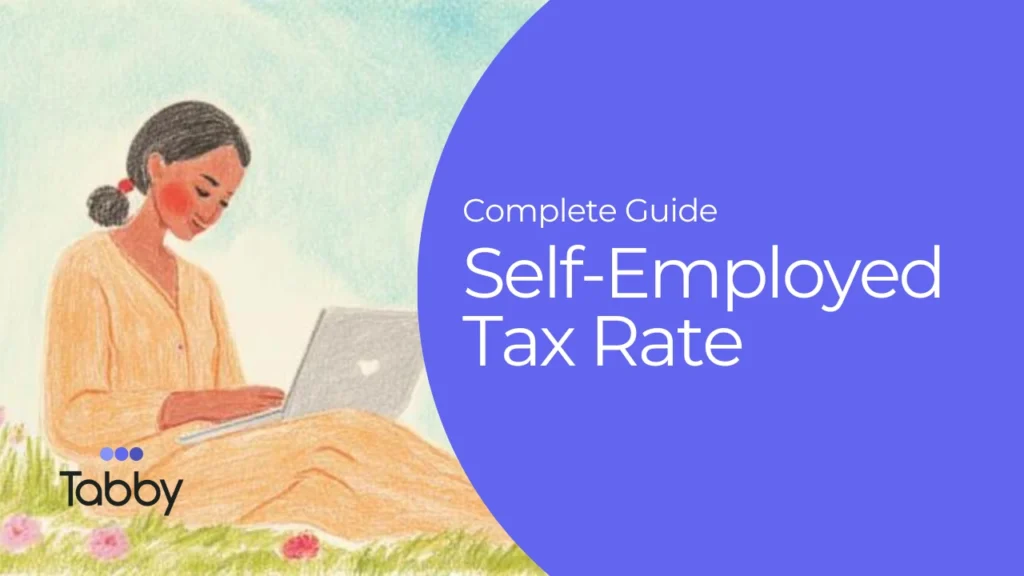

If you are new to freelancing, contract work, or running your own business, one question probably shocked you early on: What is self-employment tax, and why does it feel so high?
Many freelancers and independent contractors are surprised to discover that their tax responsibilities go far beyond regular income tax. Instead of having taxes automatically deducted from each paycheck like traditional employees, self-employed individuals must manage everything themselves, including income tax, self-employment tax, and quarterly estimated payments.
This often leads to confusion and stress, especially when unfamiliar terms like social security, Medicare, and tax calculations enter the picture. Without clear guidelines, it can feel overwhelming to figure out how much you owe, when you need to pay it, and how to avoid penalties. That is why so many self-employed workers struggle during their first few tax seasons.
The purpose of this guide is to simplify the process.
It explains exactly what the self-employment tax is, how the self-employment tax rate is calculated, and why the system works the way it does. More importantly, it shows you how to plan so taxes become manageable instead of frightening. With the right understanding and few smart habits, you can take control of your finances, avoid costly surprises and focus your energy on growing your freelance or small business career with confidence.
What is the self-employment tax?
Self-employment tax is the tax that self-employed individuals pay to fund two essential government programs: Social Security and Medicare.
In simple terms, self-employment tax exists so that people who work for themselves can contribute to the same public benefit systems that traditional employees do through payroll taxes. This ensures that freelancers, contractors, and business owners remain eligible for retirement benefits, disability coverage, and health insurance through Medicare later in life.
In other words, self-employment tax covers social security and Medicare, just like payroll taxes deducted from the paycheck of a salaried employee. The difference is that when you work for yourself, no employer shares this responsibility with you; you handle it on your own.
You are required to pay self-employment tax if you earn income from any of the following:
- A freelancer providing services independently
- An independent contractor working on short-term or long-term projects
- A gig worker earning through platforms such as ridesharing, delivery, or online marketplaces
- A solopreneur operating your own small business
- Or any 1099 workers who receive non-employment compensation
Once your net earnings reach $400 or more in a year, the IRS considers you subject to self-employment tax. Net earnings mean the profit you make after deducting allowable business expenses from your total income.
Unlike traditional employees who see taxes automatically withheld from every paycheck, self-employed workers receive their income in full and must manage their tax obligations themselves.
There is no payroll department calculating deductions, no employer paying half of the Social Security and Medicare contributions, and no automatic withholding system to rely on.
Every dollar of tax planning, from tracking income and expenses to calculating what you owe and submitting payments, becomes your responsibility.
For many first-time freelancers and business owners, this sudden shift in responsibility can feel overwhelming. However, understanding how self-employment tax works is the first step toward building a stable, confident financial system for your independent career growth.
Why self-employed workers pay self -employment tax
Employees who receive a W-2 form do not carry the full burden of payroll taxes on their own. Instead, these taxes are shared between the employee and the employer.
For social security, the employee contributes 6.2% of their wages, while the employer contributes an additional 6.2%. For Medicare, the employee pays 1.45% and the employer also pays 1.45%.
Together, this creates a combined payroll tax rate of 15.3%.
However, the situation is very different for self-employed individuals.
Self-employed individuals pay both the employer and employee portions of these taxes. Since you act as both the worker who earns the income and the business owner who would normally share the tax responsibility, you must cover the full 15.3% yourself. There is no separate employer to contribute their half on your behalf.
This is the main reason many freelancers and independent contractors feel that their taxes are unusually high. This self-employment tax rate is higher because no employer withholds taxes or absorbs part of the cost.
Every dollar of social security and Medicare contributions becomes your responsibility. While this may seem burdensome at first, these payments ensure your long-term eligibility for important benefits such as retirement income, disability protection and healthcare through Medicare.
Current self-employment tax rate explained
The current self-employment tax rate is 15.3%
It includes:
- 12.4% for social security
- 2.9% for Medicare
Breakdown:
| Tax type | rate |
| Social security | 12.4% |
| Medicare | 2.9% |
| total: | 15.3% |
Social security tax only applies to income up to a yearly limit, while Medicare applies to all earnings.
How the self-employment tax is calculated
Our self-employment tax is calculated based on your net income, not your total revenue. This means the IRS looks at what you actually earn after deducting your legitimate business expenses, rather than the total amount of money that comes in.
Step 1: First, subtract your business expenses from your total income:
Total income: business expenses= net income
This net figure represents your real profit and becomes the starting point for your tax calculation.
Step 2: Apply the 92.35% adjustment
The IRS allows self-employed individuals to multiply their net income by 92.35% before applying the self-employment tax rate. This adjustment reflects the portion of income considered taxable for social security and Medicare purposes.
Step 3: Apply the tax rate
Once adjusted, apply the 15.3% self-employment tax rate using this formula:
Net income * 92.35%* 15.3%= self-employment tax
Example:
If you earned $60,000 and had $10,000 in business expenses, your net income would be $50,000.
$50,000. *92.35%= 46,175
46,175*15.3%= $7,065 self-employment tax.
This amount is owed in addition to your regular income tax.
Self-employment tax vs income tax
Many new freelancers confuse these two:
| Tax type | What it covers |
| Self-employment tax | Social security and medicare |
| Income tax | Federal and state income taxes |
Yes, you pay both.
Self-employment tax funds future benefits like retirement, disabilities, and healthcare, while income tax supports government operations.
How to reduce or plan for self-employment tax
1. Deduct business expenses
Every legitimate expense reduces your taxable income:
- Equipment
- Software
- Home office
- Internet and phone
- Travel
- Marketing
- Education and training
2. Contribute to retirement
Contributions to
- Solo 401(k)
- SEP IRA
Can reduce taxable income significantly.
3. Plan quarterly payments
Most self-employed people must make estimated tax payments four times per year. Setting aside 25-30% of income helps avoid penalties and stress.
How Tabby Helps Manage Self Employment Taxes
Staying financially organized throughout the year is the most effective way to avoid stress during tax season, this is exactly where Tabby becomes an essential tool for self–employed professionals. Instead of waiting until the last minute to collect receipts, calculate income, and estimate taxes, Tabby helps you stay in control of your finances from day one.
Tabby helps self-employed workers stay tax ready all year. The platform is designed specifically for freelancers, independent contractors and small business owners who need a simple and reliable way to manage their financial responsibilities without complex accounting systems.
With Tabby, you can:
- Automatically track income and deduction, ensuring every dollar is accounted for
- Categorize expenses for clean bookkeeping, making it easy to see where your money goes
- Estimate self-employment and quarterly taxes, so you’re never surprised by your
- tax bill generate tax-ready reports for easy filing, whether you file yourself or work with a
- Professional
- keep financial records organized year-round, eliminating the chaos of last-minute
- Preparation access a Forever Free plan, perfect for small earners and new freelancers
Instead of scrambling at tax time, Tabby gives you a clear financial picture every month.You always know how much you’re earning; how much you should set aside for taxes and how your business is performing allowing you to focus on growth instead of paperwork.
Start free with Tabby and manage self-employment taxes easily.
Summary
Understanding what the self-employment tax is gives you control over your finances instead of fear. When you know why the tax exists, how the rate works, and how it’s calculated, you can plan smarter and keep more of your income.
With the right system in place, taxes stop being overwhelming. They become manageable. Stay on top of self-employment tax with Tabby. Track income and expenses automatically with Tabby.
FAQs
- What is self-employment tax used for?
It funds Social Security and Medicare benefits for self- employed workers, just like payroll taxes
do for employees.
- How much is the self-employment tax rate?
The current self-employment tax rate is 15.3%, covering Social Security (12.4%) and Medicare
(2.9%)
- Do self-employed individuals pay income tax as well?
Yes. Self–employed workers pay both self-employment tax and regular income tax.
- Can the self-employment tax be reduced?
Yes. Business deductions, retirement contributions, and smart planning can significantly reduce how much you owe.