
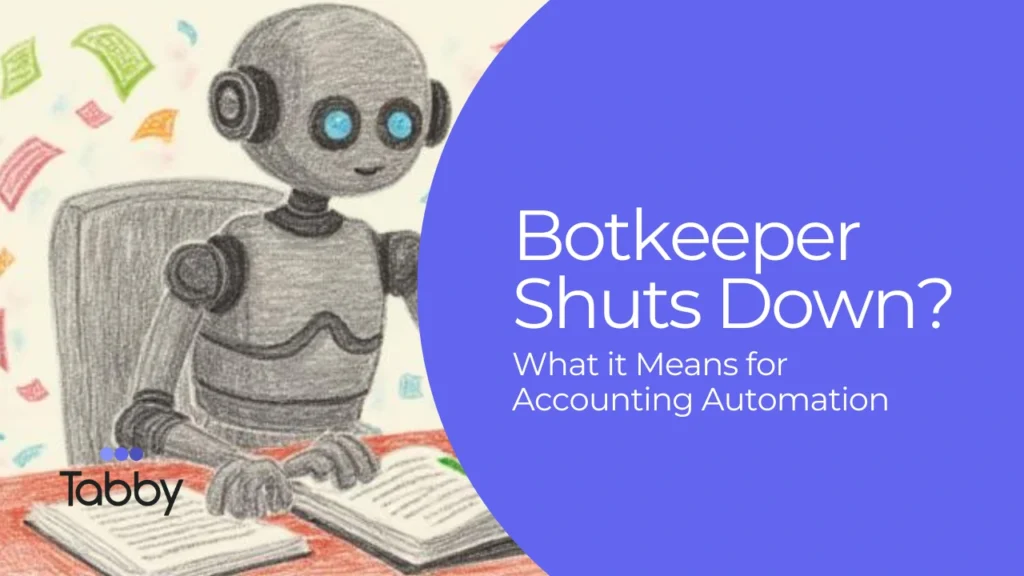
In early February 2026, the accounting technology world was caught off guard. Botkeeper, a venture-backed AI bookkeeping automation platform that had raised nearly $90 million and operated for 11 years, announced it was shutting down. For many accounting firms, the news was unexpected. The company had positioned itself as a leader in AI bookkeeping, promoting high accuracy in transaction coding, autonomous categorization, and a modular platform to streamline firm workflows.
In a statement posted on the company website on February 7, founder and CEO Enrico Palmerino described the closure as a “perfect storm” of macroeconomic shifts. By his own account, the technology had never been more capable. Botkeeper’s “Infinite” platform could clean up years of messy data in minutes, autonomously reconcile accounts, and code more than 80% of transactions with 98% accuracy. The company was two months away from launching its voice-activated AI assistant, Cassie, and an autonomous check-scanning feature.
| “Eleven years ago, we set out with a radical premise: that the age-old profession of accounting could be transformed by the ever-advancing power of Artificial Intelligence. In 2015, we weren’t just a startup; we were pioneers in a landscape that didn’t yet understand nor trust that AI could handle the nuance of a general ledger.”— Enrico Palmerino, Founder & CEO, Botkeeper — February 7, 2026 |
Yet despite those capabilities, Botkeeper could not survive rapid consolidation among its largest clients, failed acquisition negotiations, and an inability to find a durable product-market fit. The runway ran out.
This moment is bigger than a single company’s shutdown.
It raised important questions about the sustainability of AI bookkeeping platforms, the realities of scaling accounting automation, and what firms should prioritize when choosing long-term technology partners.
Botkeeper’s story offers a timely opportunity for the industry to reassess what truly defines success in accounting automation.
The Botkeeper Story
Founded in 2015 by Enrico Palmerino, Botkeeper was a technology-powered bookkeeping company for small enterprises.
It eventually transformed into an accounting firm-specific platform that posed as an AI-based automation layer that gets rid of repetitive transactional tasks.
As the accounting automation market reached maturity, Botkeeper ceased being a service to becoming a technology partner. The goal is to make bookkeeping at scale possible.
Its funding history reflected real investor conviction. The company raised $25 million in a Series B round in June 2020, led by Point72 Ventures, the venture capital firm backed by prominent investor Steve Cohen. That was followed by a $42 million Series C round in November 2021, led by Grand Oaks Capital, the firm founded by Paychex founder and chairman Tom Golisano.
At the time, Palmerino described the investment as keeping Botkeeper “on course toward transforming accounting for the better.”
Its main product, Botkeeper Infinite, demonstrated ambitious features. The firm indicated a maximum of 98 percent accuracy of coding transactions, as well as a higher than 80 percent autonomous categorization.
The system was promised to provide automated account reconciliation, quick cleanup of historical data, and modular functionality, which was provided by such tools as Activity Hub, Transaction Manager, Smart Connect, Bot Review, and document management features.
It was also reportedly on the verge of launching an assistant, Cassie, which is a voice-activated assistant, as well as self-check-scanning technology.
Towards the end of 2025, however, things started to change. At the beginning of February 2026, Botkeeper stated that it would terminate its operations.
Palmerino says that the company was hit by a macroeconomic perfect storm. He admitted that the technology was developing very fast, but the business failed to generate a product-market fit robust enough to resist sudden changes in the industry, such as the sudden consolidation that hit some of its biggest customers.
Growth projections switched rapidly in spite of the heavy investment and technical innovation. There were failed negotiations with acquisition opportunities, bridge financing, and lenders. What was previously a high-growth AI bookkeeping solution eventually hit the runway – a point of departure in the automation of accounting discourse throughout the industry.
| “It was capable of cleaning up years of messy data in minutes, autonomously reconciling accounts, and coding 80%+ of transactions with a staggering 98% accuracy.”— Enrico Palmerino, on Botkeeper Infinite — February 2026 |
Then, in early 2026, key enterprise clients underwent rapid consolidation. Revenue projections collapsed. Acquisition talks and bridge financing attempts failed. In the words of the CFO Tech News report on the shutdown, Botkeeper’s closure “adds to a growing list of venture-backed software companies struggling to adjust to higher capital costs and more cautious buying in business software” — a market now defined by longer sales cycles and tougher scrutiny on return on investment.
| “As a founder, I must admit a hard truth: despite our technological triumphs, we did not reach a level of product-market fit strong enough to withstand rapid industry shifts or changing market conditions before our time ran out. We built a world-class solution, but the market moved faster than our capital could keep up.”— Enrico Palmerino, Founder & CEO, Botkeeper — February 7, 2026 |
Why This Matters: Reading Between the Lines
The closure of Botkeeper is not just the closure of a company. It reveals structural conflicts in the accounting automation field.
- Product-Concept Fit vs. Product-Market Fit.
The distinction between creating impressive technology and creating a solution that can be taken by the market is a critical one.
Evidently, Botkeeper attained product-concept fit. It is intuitive to have AI-based automation of bookkeeping. Automation is ideal in transaction categorization, reconciliations, and data cleanup.
Capability is not all that product-market fit needs.
It demands:
- Consistent client adoption
- Repeatable ROI
- Workflow compatibility
- Pricing consistency with corporate economics.
High-level automation does not necessarily mean long-term revenue. Accounting firms work in a tight margin, set procedures, and risk sensitive environment. When the implementation drag is worked out more than the perceived value, then adoption is slowed down, no matter how sophisticated the technology is.
It is then a question of whether the product addressed the most pressing issues firms were prepared to pay for at scale.
- The Capital Burn Problem
The AI bookkeeping systems are costly. The training of models, integrations, infrastructure, compliance, and customer support are capital intensive.
According to Jason Kendall, CPA, it takes enormous financial support to automate more complicated accounting functions. Automation at the transaction level is one thing. It is much more complicated and costly to replace deeper accounting judgment.
When an organization iterates intensively, i.e., adding modules, pursuing a different positioning, and more extensive automation, without attaining consistent product-market fit, the burn rate of capital increases. A 90 million dollar funding package can be lost in no time when the scale-out has to come before profitability.
This points to an even bigger fact about fintech: expansion that lacks a sustainable economy is brittle.
- Client Concentration Risk
In late 2025, Palmerino cited the sudden consolidation of the industry with some of the largest customers of Botkeeper. This is a crucial signal.
The revenue volatility is high when the automation vendors are dependent on a few large companies. The financial pressure may be immediately caused by a merger, acquisition, or strategic change between the leading clients.
There is diversity in customer bases, which brings about resilience. Focused ones increase the risk.
- The Human Element
Probably the greatest lesson is philosophical. Jody Padar stressed that it is not the future of accounting, where human beings will be replaced by AI, but rather the empowerment of professionals to utilize it rationally.
This fact is important.
Accounting is trust-based. It demands judgment, interpretation, and accountability. When the automation messaging focuses on full autonomy but not augmentation, the level of adoption increases.
It raises fair questions:
- Did it have technology before the clients were ready?
- Was the value proposition well-posed to firms?
- Was the solution focused more on real workflow pain points rather than aspirational automation?
AI bookkeeping is not a failure. However, the industry is coming to understand that sustainable automation should not seek to avoid human expertise, but should incorporate it.
There is a deeper philosophical lesson here, and it was articulated powerfully by Jody Padar — known in the profession as “The Radical CPA” and a former VP at Botkeeper herself — in a LinkedIn post reacting to the news:
| “Botkeeper mattered. It mattered because it forced an old profession to confront a hard truth… AI wasn’t coming someday. It was already here… Innovation isn’t linear. Pioneers don’t always get to be incumbents.”— Jody Padar, “The Radical CPA,” former VP, Botkeeper |
What Accounting Firms and Business Owners Should Learn
To the owners of accounting firms and decision-makers, the closure of Botkeeper is by no means a warning that AI is dangerous, but rather a reminder that the consideration of automation should be viewed through the prism of sustainability.
Prioritize Sustainability Over Sophistication
It is possible to have features that are advanced and enticing. AI dashboards, autonomous coding percentages, and multi-module platforms are impressive in a demo.
Yet companies must pose more difficult questions:
- Does it have long-term endurance as a company?
- Does the revenue-model allow sustainable growth?
- Is retention and increasing usage of current customers?
Stability indicators do not include funding announcements. Sustainable product-market fit and disciplined growth are.
Solid partnering is more important than a feature roadmap.
The Complexity of Implementation Counts
An increased functionality does not necessarily increase the results.
The modules are added, and each introduces:
- Training time
- Workflow redesign
- Change management costs
- Operational dependency
Subscriptions are not the only part of the total cost of ownership. It encompasses internal time, onboarding friction, and productivity dips in transition.
Automation must also minimize cognitive and operational workload, rather than putting in place a second system requiring constant monitoring.
Assess Stability in Partnership
Vendors of automation in use by firms should be evaluated based on structural criteria:
- Client segment diversification of revenue.
- Definitive ROI case studies that have quantifiable results.
- Open pricing and roadmap communication.
- Practical assertions concerning AI abilities.
Sustainability risk is greater if projections rely on the upsurge scale or aggressive growth in the accounting functions, which are non-simplistic.
Technology as an Enabler
The point of view of Lot Buluran-Tala is very similar: technology is supposed to assist accountants, rather than to replace them.
The toughest automation platforms:
- Help with menial work.
- Improve data visibility
- Provide guardrails
- Retain decision-makers amongst the professionals.
Human-in-the-loop systems establish credibility. Providing promises that are fully autonomous can produce headlines – but creating longevity through enabling.
Risk Minimization Is Necessary
To ensure that they protect themselves in advance, firms should:
- Ensuring data portability
- Sustaining internal competencies.
- Not to be completely dependent on a type of automation provider.
- Pre-disruption exit strategies.
Automation is an effective speed accelerator. However, it must make it more resilient, rather than establish a single point of failure in operation.
Where Does the Accounting Industry Go From Here?
The closure of Botkeeper is not the death of automation in accounting. In a way, it is the start of an even stricter stage.
The interest in the automation of AI bookkeeping and accounting is high. Companies are still struggling with talent deficiencies, profitability pressure, and rising customer demands. Automation is not a choice; it is a structural one.
However, the standards of assessing vendors are changing.
According to Intuit’s 2025 Accountant Tech Survey, accountants already dedicate 62% of their time to compliance-oriented tasks, including bookkeeping and tax filings — exactly the domain that AI is best positioned to assist with. Meanwhile, the industry continues to face talent shortages: for large accounting firms, recruiting and retaining qualified staff was the number one challenge heading into 2026, according to Accounting Today’s Year Ahead survey. Automation is a structural necessity, not a luxury.
The future of successful accounting automation platforms is probably not emphasized by the extent to which they automate, but by the ability to be sustained. The growth will prefer those companies that are capital efficient, have product-market fit, and have realistic implementation directions as opposed to aggressive feature additions.
Effective automation will not resemble the Hypes made initially.
- It will prioritize:
- Functional workflow integration.
- Human-in-the-loop safeguards
- Clearly defined performance measures.
- Measurable ROI for firms
To be brief, the industry is doing away with experimentation and entering the maturity phase.
The positive side of this development is that it encourages well-planned platforms that consider AI as a helper, and not as something that will eliminate professionalism. The concept of sustainable automation has stopped being about demonstrating technological potential.
It concerns the provision of consistent, reliable value in the real-world accounting settings.
But as the CFO Tech News analysis of the Botkeeper shutdown made clear, the market has fundamentally changed. Buyers are demanding proof, not potential. The platforms that thrive will not be those with the longest feature lists, but those that are capital-efficient, deeply aligned with how users actually work, and built on a human-first philosophy — where AI amplifies professional judgment rather than attempting to replace it.
| “By 2026, 90 percent of all financial functions will involve at least one AI-enabled technology. The question is no longer whether to automate — it is which platforms will still be here in five years.”— According to Source |
Conclusion
The tale of Botkeeper is a lesson in the fact that the notions of innovation and sustainability do not mean the same thing. The company contributed to the rapidization of the AI bookkeeping discussion and has given the profession reasons to reimagine how the work of transactions can be automated. That contribution matters.
Meanwhile, its closure solidifies a bitter truth that automation of accounting only works when technology, demand, and business principles align. Substitution of enduring product-market fit and long-term operational stability cannot be achieved in the form of strong funding, ambitious features, and rapid expansion.
To the accounting companies, the learning is apparent. The choice of automation must be based on stability, clarity, and practical value, rather than technical capability. The proper partner appreciates AI systems as well as the realities of accounting processes.
In a maturing industry, like Tabby, which is a carefully-crafted platform, is indicative of this move toward sustainable and human-friendly automation, engineered not only to be innovative, but to last.
Only in need of a new approach to automation? Find out how Tabby can bring a successful long-term AI bookkeeping approach that is reached out to be transparent and practical.